Majlis-ul-Umara
The nation's highest consultative council. A monthly consultation convenes on the first Friday of each English month — reading of malfuzat, review of reports and issuing of guidance.
A Movement to Revive the Sunnah
What and why — an unbroken caravan of the deen from Hazrat Thanvi (r.a.) to Muhiyus-Sunnah, with its centre at this Jamia.
In 1358 AH, under the far-sighted guidance of the renowned scholar Hazrat Ashraf Ali Thanvi (r.a.), Majlis-e-Dawatul Haq was founded as a means to reform a bewildered society. Its core aim is to follow the Sunnah of the Messenger ﷺ, establish the Sunnah at every level of society, and stand against innovation (bid'ah) and evil.
Founded by Thanvi (r.a.), Dawatul Haq is essentially a guidance for the betterment of humanity. Through the efforts of his devoted followers and khulafa — Hazrat Athar Ali (r.a.), Hazrat Abdul Wahhab (Hathazari) (r.a.), Shamsul Haq Faridpuri (r.a.) and others — Thanvi's thought spread widely in this land as well.
After the passing of Thanvi's khulafa one after another, the helm of Dawatul Haq was held by the luminous descendant of the Prophet's line, Muhiyus-Sunnah Mawlana Shah Abrarul Haq Hardoi (r.a.). Shortly before his passing he graced the 11th central Ijtema of Majlis-e-Dawatul Haq.
In 1993, in a gathering of his disciples and khulafa, Hardoi (r.a.) expressed deep concern at the state of the work in Bangladesh and appointed a worthy leader for it. On 3 Dhul-Qa'dah 1413 AH (1993), in a written declaration penned by Mufti Abdur Rahman (r.a.), he named the Jamia's Muhtamim, Allama Mahmudul Hasan, as the Amir-ul-Umara of Majlis-e-Dawatul Haq Bangladesh.
Our murshid Hazrat Mawlana Shah Abrarul Haq (may his blessings continue) has named the Muhtamim of Jamia Islamia Darul Uloom Madania, Jatrabari — Mawlana Mahmudul Hasan — as the Amir-ul-Umara of Majlis-e-Dawatul Haq Bangladesh.
The madrasas run and affiliated under Majlis-e-Dawatul Haq Bangladesh and the Jatrabari madrasa are spread across the eight divisions of the country.
119+
Affiliated Madrasas
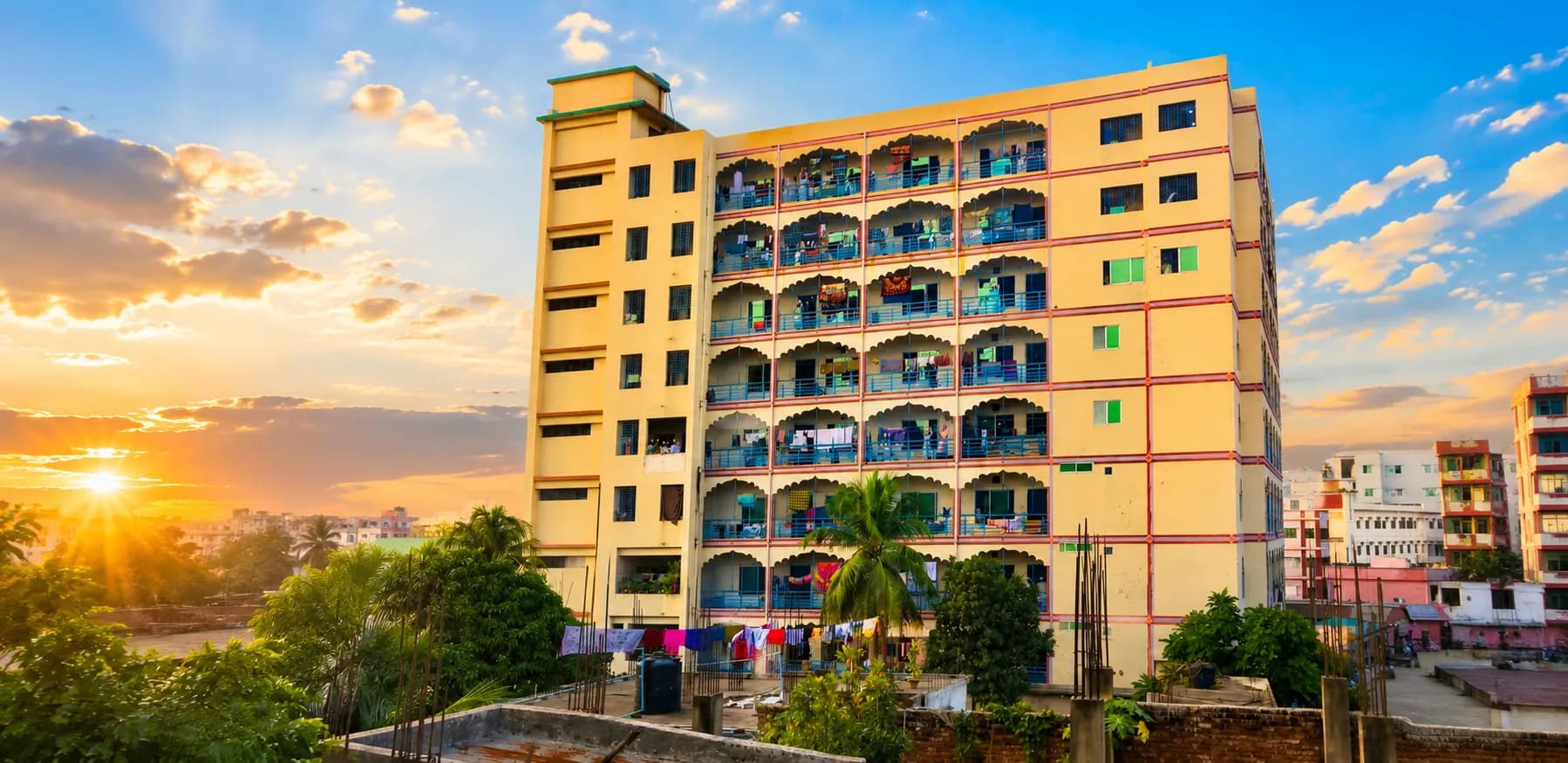
At its centre: Jamia Islamia Darul Uloom Madania, Jatrabari.
These principles were laid down by Hardoi Hazrat (r.a.) himself (source: Majlis-e-Dawatul Haq Hardoi, 10 Shawwal 1424 AH).
If needed, the Amir and deputy Amirs may be changed after consultation with the 'Majlis-ul-Umara'.
The annual Ijtema of Dawatul Haq is held at the central Jamia, Jatrabari; with the Amir-ul-Umara's approval it may also be held at district/thana level.
No Amir, deputy Amir or special member may work separately under the Dawatul Haq name (or any other) without the Majlis-ul-Umara's approval.
Managing and supervising all Dawatul Haq activity across Bangladesh rests with the Majlis-ul-Umara.
Members shall refrain from collecting open donations from halqa members for district/thana Ijtemas.
At a thana Ijtema, the participation of one eminent scholar — the Amir-ul-Umara or a member he nominates — is essential.
For a district/thana Ijtema, both the Amir-ul-Umara and the halqa Amir may act as convener.
All central announcements and circulars are issued only from the centre.
If a disagreement arises on any matter, the decision of the Amir-ul-Umara is final.
The Amir and deputy Amirs remain free of direct politics.
The regular councils and programmes through which Dawatul Haq's work is carried out.
The nation's highest consultative council. A monthly consultation convenes on the first Friday of each English month — reading of malfuzat, review of reports and issuing of guidance.
Thana-level halqas across the country. Each holds one general and one workers' council every fifteen days; all activity is recorded and presented to the Majlis-ul-Umara.
At least two general gatherings a month under the local halqa, to kindle religious awareness among the area's Muslims and advance the programme.
Held at least once a month for inward and outward purification — dhikr, salawat and spiritual reform.
On the first Friday of each Arabic month after Fajr at the Jatrabari madrasa, gathering ulama, imams, muezzins and devout Muslims in two sessions.
A central annual Ijtema each year, joined by ulama, imams and devout Muslims from across the country.
Under the direct supervision of Majlis-e-Dawatul Haq, this Jamia has run the Noorani Muallim (teacher) training course for over two decades — seven year-round batches (45 days each; 30 in Ramadan and 60 in Shawwal).
It teaches correct recitation of the Noble Quran, the science of qira'at and tajweed, practical drills, methods of teaching, hadith and masail, and the essential Sunnahs of daily life. Those who pass the final examination receive a certificate bearing the signature of the Amir-e-Dawatul Haq.
Establishing the Sunnah, curbing innovation and evil, and reforming society — you too can take part in this noble work. Join the caravan through your nearest halqa, the general gatherings and the annual Ijtema.
May Allah accept this effort and grant us the tawfiq to establish the Sunnah at every level of society — Ameen.